
Keynote Speakers
Keynote Speaker I

Prof. David W. Coit
Rutgers University, USA
Speech Title: Systems of Dependent Degradation Processes: Modeling Alternatives and Research Challenges
Bio: System reliability models and analyses involving multiple failure processes are challenging when the failure or degradation processes are competing and dependent. For reliability modeling of complex multiple component systems, component failure time and/or degradation are often assumed to be independent as a simplifying assumption, but this is not always appropriate for actual engineering applications. If one component degrades or fails prematurely, it is possible or even likely that other components also degrade or fail prematurely given the shared working environment or other reasons. This provides evidence of dependent component failure times or failure processes. When system models are extended to complex systems considering dependency, different perspectives and models are needed for system reliability modeling. These different approaches for modeling the reliability for systems with dependent failure processes are reviewed, a new model is presented based on the superposition of gamma processes, and research challenges are presented. Models for dependent failure and/or degradation processes can be formulated using joint multivariate distributions, copula functions, Markov chains, or random effects stochastic processes. Furthermore, machine learning models are beneficial or even necessary when there are dynamic data sets and changing conditions. Each approach has specific advantages considering model fidelity, precision, ability to generalize or extend, and practicality. Finally, new perspectives and modeling challenges are described on the integration of optimization models and machine learning to select maintenance policies for these types of systems with dependent degrading processes.
Bio: David Coit is a Professor in the Department of Industrial & Systems Engineering at Rutgers University, Piscataway, NJ, USA. He has also had visiting professor positions at Universite Paris-Saclay, Paris, France and Tsinghua University, Beijing, China. His current teaching and research involves system reliability modeling and optimization, and energy systems optimization. He has over 140 published journal papers and over 100 peer-reviewed conference papers (h-index 70), including the most highly cited paper ever in Reliability Engineering & System Safety (RESS) and the 4th most cited paper in IEEE Transactions on Reliability. He is currently an Associate Editor for RESS and Journal of Risk and Reliability and was previously an Associate or Department Editor for IEEE Transactions on Reliability and IISE Transactions. His research has been funded by USA National Science Foundation (NSF), including a NSF CAREER grant to develop new reliability optimization algorithms considering uncertainty. He has been the recipient of the P. K. McElroy award, Alain O. Plait award and William A. J. Golomski award for best papers and tutorials at the Reliability and Maintainability Symposium (RAMS). Prof. Coit received a BS degree in mechanical engineering from Cornell University, an MBA from Rensselaer Polytechnic Institute (RPI), and MS and PhD in industrial engineering from the University of Pittsburgh. He is a fellow of the Institute of Industrial & Systems Engineers (IISE).
Keynote Speaker II
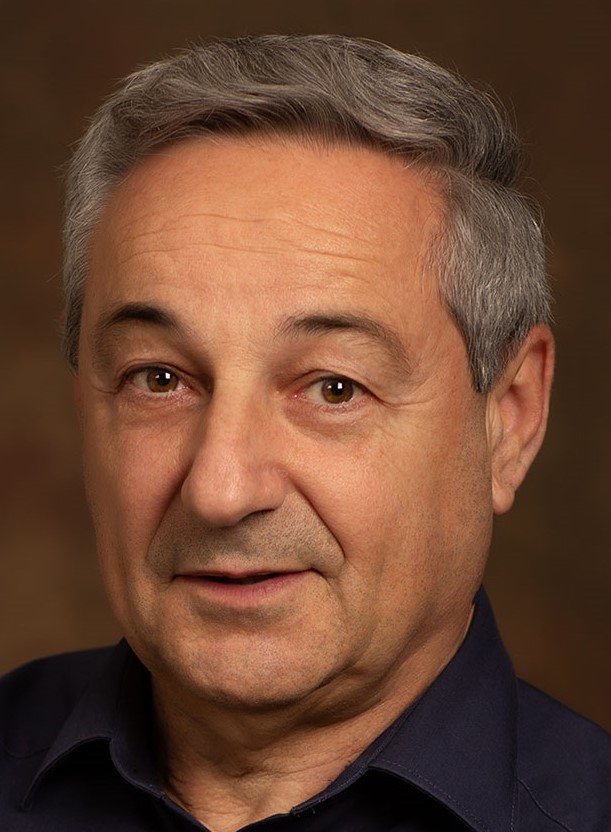
Prof. Gregory Levitin
NOGA - Israel Independent System Operator
Speech Title: Protecting Complex Systems from Disasters and Deliberate Attacks
Bio: The purpose of this talk is to introduce situations in which complex technical or organizational systems are involved in accidents, crises, wars, and terrorism. Phenomena related to reliability, risk, safety, security, and vulnerability will be considered. Models integrating risk analysis, reliability theory, and game theory will be presented. A system defense strategy combining partitioning, protection, decoy deployment, and preemptive strike will be explored, and the interrelationships between various defensive actions will be analyzed. A generalized model of damage caused to a complex multi-state series-parallel system resulting from a deliberate attack will be presented. The problem of limited resource allocation among various defense measures will be considered in optimal and minimax formulations. Illustrative examples will be provided.
Bio: Gregory Levitin received his PhD degree in Industrial Automation from Moscow Research Institute of Metalworking Machines in 1989. From 1982 to 1990 he worked as software engineer and researcher in the field of industrial automation. From 1991 to 1993 he worked at the Technion (Israel Institute of Technology) as a postdoctoral fellow at the faculty of Industrial Engineering and Management. Prof. Levitin is presently a senior expert at the Reliability Department of NOGA - Israel Independent System Operator and distinguished visiting professor at Southwest Jiaotong University. His current interests are in system reliability. In this field Prof. Levitin has published more than 400 papers and five books. He served as a chair of the ESRA Technical Committee on System Reliability, as associate editor of IEEE Transactions on Reliability, area coordinator of International Journal of Performability Engineering. Now he serves as editor of Reliability Engineering & System Safety, and member of editorial boards of several other journals.
Keynote Speaker III
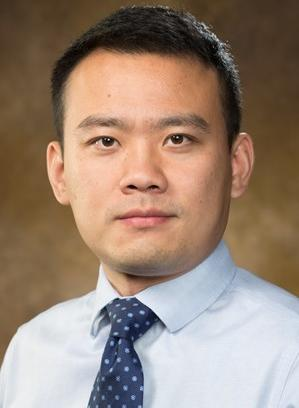
Prof. Xiao Liu
Georgia Institute of Technology, USA
Speech Title: Statistical Learning and Sequential Designs for
Reduced-Order Modeling of Parametric Systems
Bio: Projection-based model reduction is an essential tool for constructing parametric Reduced-Order Models (ROM) (in design, control, uncertainty quantification, digital twins applications, etc.). Utilizing the snapshot data from solving full-order governing equations, the Proper Orthogonal Decomposition (POD) computes the optimal basis modes, and a ROM can be constructed in the low-dimensional vector subspace spanned by the POD basis. For parametric governing equations, a potential challenge arises when there is a need to update the POD basis to adapt ROM that accurately capture the variation of a system's behavior over its parameter space. In the first part of the talk, we propose a Projected Gaussian Process (pGP) and formulate the problem of adapting the POD basis as a supervised statistical learning problem, for which the goal is to learn a mapping from the parameter space to the Grassmann manifold that contains the optimal subspaces. As a statistical learning approach, the proposed pGP allows us to optimally estimate (or tune) the model parameters from data and quantify the statistical uncertainty associated with the prediction. Building on the proposed pGP, the second part of the talk presents a sequential design problem where snapshot data are sequentially generated (by sequentially choosing the parameter settings for solving the full-order equations) such that that the uncertainty associated with the parameter-to-subspace map can be efficiently reduced. The proposed sequential designs are based on a manifold-variance acquisition that quantifies posterior uncertainty in principal-angle metrics and is implemented through a sequential greedy algorithm with a smoothed optimization step over the parameter domain. Numerical examples are presented to demonstrate the application and performance of the proposed methods.
Bio: Dr. Xiao Liu is the David M. McKenney Family Associate Professor at the H. Milton Stewart School of Industrial and Systems Engineering, Georgia Institute of Technology (Georgia Tech). He is also an Associate Director of the Brook Byers Institute of Sustainable Systems (BBISS)---one of the eleven Interdisciplinary Research Institutes (IRIs) at Georgia Tech. Before joining Georgia Tech, he held the Research Staff Member position at the IBM Thomas J. Watson Research Center, New York and Singapore, and was the John L. Imhoff Endowed Chair and Assistant Professor at the Department of Industrial Engineering, University of Arkansas. Dr. Liu's research focuses on statistical methods and machine learning in engineering domain knowledge intensive environments. His work has appeared in Engineering, Applied Math and Statistics journals (e.g., JASA, Technometrics, JQT, SIAM Journal on Scientific Computing, AIAA Journals, IISE Transactions, IEEE Transactions, Annals of Applied Statistics, etc.), and has been recognized by various academic societies (e.g., 2025 Frank Wilcoxon Prize of Technometrics, Statistics in Physical Engineering Sciences (SPES) Award by the American Statistical Association (ASA), IBM Outstanding Technical Achievement Award, and best paper awards from multiple conferences including INFORMS and IISE). Dr. Liu's research has primarily been supported by the U.S. National Science Foundation, including the NSF CAREER award. Dr. Liu served as the President of the Data Analytics & Information Systems division of IISE, and the Program co-Chair for the 2025 IISE Annual Conference & Expo. He is currently on the Editorial Board and an Associate Editor of multiple journals, such as Technometrics, IISE Transactions, QREI and IJRQSE. Dr. Liu received his PhD degree from the Department of Industrial and Systems Engineering, National University of Singapore (NUS).